
ACTI
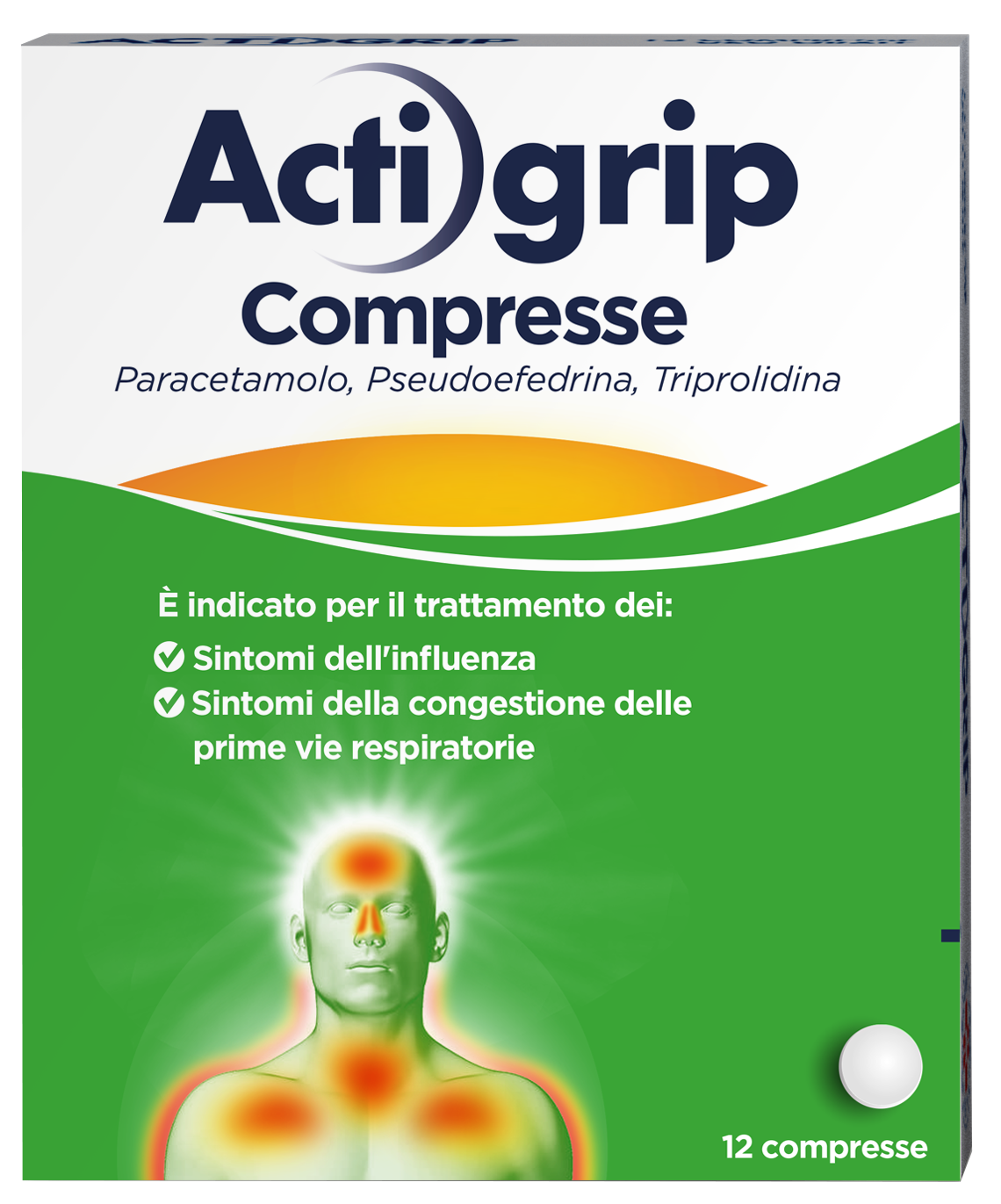
ACTIGRIP 2.5 MG/60 MG/500 MG TABLETS 12 TABLETS IN AL//PVC/PVDC BLISTER
ACTIGRIP 2.5 MG/60 MG/500 MG TABLETS 12 TABLETS IN AL//PVC/PVDC BLISTER

 Secure payment
 Discreet and sanitized package
 Fast and safe shipping


Description
Description
ACTIGRIP 2.5 mg/60 mg/500 mg tablets
Paracetamol, Pseudoephedrine hydrochloride, Triprolidine hydrochloride
What is it and what is it used for?
Actigrip contains three active ingredients: paracetamol (which relieves pain and lowers fever), pseudoephedrine hydrochloride (a decongestant for a stuffy nose) and triprolidine hydrochloride (an antihistamine that reduces nasal discharge and dilates the bronchi).
Actigrip is used to treat cold symptoms characterised by nasal obstruction, watery rhinorrhea, headache and/or fever.
Actigrip should be used by adults and children over 12 years of age.
Talk to your doctor if you do not feel better or feel worse after 3-5 days of treatment.
What you need to know before taking the medicine
Do not take Actigrip if:
• are allergic to paracetamol, pseudoephedrine hydrochloride, triprolidine hydrochloride, other antihistamines, or any of the other ingredients of this medicine (listed in section 6);
• have high blood pressure (hypertension) or have pre-existing cardiovascular disease or have had a stroke;
• if you have very high blood pressure (severe hypertension) or hypertension not controlled by drugs;
• if you suffer from severe acute (sudden) or chronic (long-term) kidney disease or kidney failure;
• you are taking or have taken in the last two weeks medicines for depression known as monoamine oxidase inhibitors (MAOIs) since in these cases the concomitant use of Actigrip may cause an increase in blood pressure or hypertensive crisis (see "Other medicines and Actigrip");
• is taking, orally and/or nasally, vasoconstrictor sympathomimetic drugs (see "Other medicines and Actigrip");
• suffers from epilepsy;
• have glaucoma (increased pressure inside the eye which may cause vision to worsen);
• suffers from severe hemolytic anemia (a disease that destroys red blood cells);
• have had symptoms due to a disease known as favism or fava bean disease, which causes a decrease in red blood cells (glucose-6-phosphate dehydrogenase deficiency);
• have a narrowing (stenosis) of the stomach or intestine, bladder, urethra or ureters (urogenital system);
• has breathing problems or suffers from asthma;
• has diabetes;
• have serious liver or kidney problems;
• has thyroid disease;
• has an enlarged prostate (which causes problems such as difficulty urinating or the need to urinate frequently);
• is pregnant or breastfeeding.
Do not use Actigrip in children under 12 years of age.
Warnings and precautions
Talk to your doctor or pharmacist before taking Actigrip if:
• has decreased kidney function;
• suffer from liver disease or have severe hepatocellular insufficiency;
• has respiratory problems such as emphysema and chronic bronchitis;
• if you suffer from migraine and are being treated with ergot alkaloids (such as dihydroergotamine, ergotamine or methylergometrine);
• suffers from alcoholism.
While taking Actigrip, tell your doctor immediately if:
If you have serious illnesses, including severe kidney failure or sepsis (when bacteria and their toxins circulate in the blood, causing organ damage), malnutrition, chronic alcoholism, or if you are also taking flucloxacillin (an antibiotic). A serious condition called metabolic acidosis (an abnormality of the blood and fluids) has been reported in patients with these conditions when paracetamol is used at regular doses over a prolonged period or when paracetamol is taken in combination with flucloxacillin. Symptoms of metabolic acidosis may include severe breathing difficulties with rapid, deep breathing, drowsiness, nausea, and vomiting.
Severe skin reactions
Serious skin reactions such as acute generalized exanthematous pustulosis (AGEP), Stevens-Johnson syndrome (SJS), toxic epidermal necrolysis (TEN), and drug reaction with eosinophilia and systemic symptoms (DRESS) have been reported very rarely in patients treated with paracetamol. Talk to your doctor or pharmacist before taking Actigrip to learn the signs of serious skin reactions and discontinue use at the first sign of a rash or any other sign of hypersensitivity (see section "4. Possible side effects"). Patients appear to be at highest risk early in the course of therapy: the onset of the reaction occurs in most cases early in the course of treatment.
Severe skin reactions such as acute generalized exanthematous pustulosis (AGEP) have been reported very rarely with pseudoephedrine-containing products. This acute pustular eruption may occur within the first 2 days of treatment, with fever and numerous, small, mostly non-follicular pustules arising from widespread edematous erythema, located primarily in the skin folds, trunk, and upper limbs. If signs and symptoms such as the formation of numerous small pustules with or without pyrexia or erythema are observed, ACTIGRIP should be discontinued and a physician should be consulted (see section "4. Possible side effects").
Consult your doctor if your fever persists for more than 3 days or if you do not feel better or feel worse after 5 days of treatment, for example, you develop a high fever, notice skin lesions, or have a persistent cough and a lot of mucus.
• High doses of paracetamol can cause adverse reactions, including serious ones, especially affecting the liver, kidneys, and blood. If you take more than the recommended dose, both adults and children should consult a doctor for careful supervision, even if no obvious signs or symptoms appear. Do not use Actigrip at higher than recommended doses, or for a long time, or at the same time as other medications containing paracetamol (see "Other medicines and Actigrip");
• Due to its paracetamol content, Actigrip may influence the results of some laboratory tests, such as tests for measuring uric acid (uricemia) and glucose (glycemia) in the blood;
• May cause drowsiness;
• Due to the pseudoephedrine content, Actigrip should be discontinued if, for example, high blood pressure, rapid heartbeat, feeling unwell, nausea, headache or increased headache occur;
• Due to its triprolidine content, Actigrip may increase the sedative effects of substances that depress the central nervous system such as alcohol, sedatives, tranquilizers (see "Other medicines and Actigrip"). You should therefore avoid drinking alcoholic beverages during treatment with Actigrip and should consult your doctor before taking Actigrip in conjunction with medicines that depress the central nervous system;
• If you experience sudden abdominal pain, rectal bleeding or other signs of ischemic colitis (see section "4. Possible side effects"), stop using ACTIGRIP and contact your doctor;
• With Actigrip, reduced blood flow to the optic nerve may occur. If you experience sudden vision loss, stop taking Actigrip and contact your doctor or healthcare provider immediately. See section 4.
Cases of posterior reversible encephalopathy syndrome (PRES) and reversible cerebral vasoconstriction syndrome (RCVS) have been reported following the use of medicines containing pseudoephedrine. PRES and RCVS are rare conditions that can lead to reduced blood flow to the brain. Stop using Actigrip immediately and seek immediate medical attention if you develop symptoms that could be signs of PRES or RCVS (see section 4 "Possible side effects" for symptoms).
One of the active ingredients in Actigrip, pseudoephedrine, can be abused, and high doses of pseudoephedrine can be toxic. Continued use may result in taking more Actigrip than recommended to achieve the desired effect, thus increasing the risk of overdose. The maximum recommended dose and duration of treatment should not be exceeded (see section 3).
Avoid taking this medicine if you are taking anti-inflammatory medicines.
For those who play sports : the use of the drug without therapeutic need constitutes doping and may still result in a positive result in anti-doping tests.
Possible side effects
Like all medicines, this medicine can cause side effects, although not everybody gets them.
Stop treatment with Actigrip immediately and contact your doctor urgently if you experience any of the following conditions:
• develops symptoms that may be signs of posterior reversible encephalopathy syndrome (PRES) and reversible cerebral vasoconstriction syndrome (RCVS). These include:
- severe headache with sudden onset;
- nausea;
- vomit;
- confusion;
- convulsions;
- changes in vision;
• allergic reactions, even serious ones, such as swelling (angioedema) of the face, eyes, lips, sudden drop in blood pressure (anaphylactic shock);
• convulsions, central nervous system excitation, such as inability to fall asleep (insomnia), excessive happiness (euphoria) and tremors;
• very rare cases of serious skin reactions, manifesting for example with redness, blistering or pus formation and peeling (e.g. erythema multiforme, Stevens-Johnson syndrome and toxic epidermal necrolysis) have been reported with the use of paracetamol (see section 2 "Warnings and precautions").
Not known (frequency cannot be estimated from the available data):
• serious conditions affecting the blood vessels in the brain known as posterior reversible encephalopathy syndrome (PRES) and reversible cerebral vasoconstriction syndrome (RCVS);
• hallucinations, including visual ones, anxiety, nervousness, restlessness;
• alterations in sensitivity (paraesthesia), psychomotor hyperactivity, stroke (cerebrovascular accident);
• alterations in heart rhythm (arrhythmia), feeling of heart in the throat (palpitations), myocardial infarction;
• nosebleeds (epistaxis);
• itchy skin rash, hives, pruritus, photosensitivity;
• skin reactions due to drug intake (fixed eruption);
• severe skin rash characterised by the formation of pustules (acute generalised exanthematous pustulosis) (see section 2 "Warnings and precautions");
• difficulty urinating (dysuria);
• ischemic colitis;
• increased transaminases (a slight increase in transaminase levels may occur in some patients taking recommended doses of paracetamol. These cases are not accompanied by liver failure and generally resolve with continuation or discontinuation of paracetamol therapy);
• increased blood pressure;
• reduction of blood flow to the optic nerve (ischemic optic neuropathy);
• a serious condition that can make the blood more acidic (called metabolic acidosis), in patients with a serious illness who use paracetamol (see section 2).
Tell your doctor if you experience any other side effects during treatment with ACTIGRIP:
• more or less sudden appearance of skin lesions, for example spotty or widespread changes in color (rash);
• stomach or intestinal reactions such as abdominal discomfort, constipation, nausea, vomiting, diarrhoea (which may be reduced by taking the medicine after meals), dry mouth;
• alteration of liver function, inflammation of the liver (hepatitis);
• drowsiness, feeling of tiredness (asthenia), sweating, dizziness;
• increased density of bronchial secretions;
• headache, low blood pressure, increased heart rate (tachycardia), especially in the elderly;
• blood changes such as a decrease in platelets (thrombocytopenia) or white blood cells (leukopenia, neutropenia, agranulocytosis) or red blood cells (anemia);
• changes in the kidney, such as unusual changes in the amount of urine produced, inability to empty the bladder (urinary retention), blood in the urine (hematuria), inflammation of the kidney (interstitial nephritis) or changes in kidney function (acute renal failure);
• increased pressure inside the eye with possible worsening of vision (acute glaucoma attack), blurred vision, dilation of the pupils (mydriasis).
In isolated cases, hemorrhagic strokes have occurred in patients using drugs containing a vasoconstrictor (such as pseudoephedrine). In particular, these cerebrovascular accidents have occurred due to overdose, improper use and/or in patients with vascular risk factors (see section "2. What you need to know before taking Actigrip" - Do not take Actigrip if - Warnings and precautions" ).
Reporting of side effects
If you experience any side effects, including any not listed in this leaflet, talk to your doctor or pharmacist. You can also report side effects directly via the national reporting system at: https://www.aifa.gov.it/content/segnalazionireazioni-avverse .
By reporting side effects you can help provide more information on the safety of this medicine.
ACTI
ACTIGRIP 2.5 MG/60 MG/500 MG TABLETS 12 TABLETS IN AL//PVC/PVDC BLISTER
ACTIGRIP 2.5 MG/60 MG/500 MG TABLETS 12 TABLETS IN AL//PVC/PVDC BLISTER
Couldn't load pickup availability
Product images are purely indicative and may not be fully representative of the packaging and product features, as they may vary in color, size, or content. Any decorations, gift wrapping, and items included in the images for product presentation purposes will not be shipped with orders. Product names, ingredients, and percentages indicated in the descriptions are purely indicative and may be subject to change or updates by the manufacturers. Due to the impossibility of updating these updates in real time, the photos and technical information of the products listed on farmaInnovation.it may differ from those shown on the label or otherwise disclosed by the manufacturers. The only identifying element is the MINSAN (Ministry of Health) code. Farmacia Barni, farmainnovation.it , does not guarantee the accuracy and timeliness of the information published and declines all responsibility for any errors, omissions, or failure to update it. farmainnovation.it assumes no responsibility for damages of any kind that may arise from accessing the published information.