
ASPIRINA
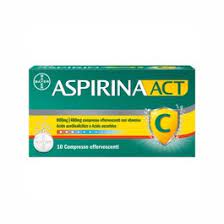
ASPIRINAACT 800 MG/480 MG Effervescent Tablets with Vitamin C 10 Tablets in PAP/PE/AL/IONOMER Strips
ASPIRINAACT 800 MG/480 MG Effervescent Tablets with Vitamin C 10 Tablets in PAP/PE/AL/IONOMER Strips

 Secure payment
 Discreet and sanitized package
 Fast and safe shipping


Description
Description
Aspirinaact 800 mg/480 mg effervescent tablets with vitamin C
Acetylsalicylic acid and ascorbic acid
What is it and what is it for?
Aspirinaact contains:
• acetylsalicylic acid, which calms pain and reduces fever;
• ascorbic acid, also known as vitamin C.
Aspirinaact is used:
• for the symptomatic treatment of mild to moderate pain, such as headache, toothache and menstrual pain;
• in the common cold or flu symptoms for the symptomatic treatment of pain and fever;
• Vitamin C (ascorbic acid) supports the body's defense system by promoting the action of white blood cells.
Aspirinaact is used in adults and adolescents over 16 years of age.
What you need to know before taking the medicine
Do not take Aspirinact:
• if you are allergic
- to acetylsalicylic acid, ascorbic acid or any of the other ingredients of this medicine (listed in section 6);
- to other nonsteroidal anti-inflammatory drugs (NSAIDs), which are medicines used to treat pain, fever, or inflammation.
• if you have too many mast cells (pre-existing mastocytosis). The use of acetylsalicylic acid can induce serious hypersensitivity reactions (including circulatory shock with flushing, low blood pressure, rapid heart rate and vomiting);
• if you have a history of asthma caused by the use of acetylsalicylic acid or a related medicine (particularly NSAIDs);
• in the third trimester of pregnancy (if you are more than 24 weeks pregnant);
• if you suffer from gastric or intestinal ulcers;
• if you have a bleeding disorder or are at risk of bleeding (haemorrhagic condition);
• if you have severely reduced liver or kidney function;
• if you have severely reduced and uncontrolled heart function;
• if you are taking methotrexate therapy in doses of 15 mg/week or higher;
• if you are taking medicines to thin the blood and prevent it from clotting (oral anticoagulants) and have a history of stomach or intestinal ulcers;
• if you have kidney stones, conditions in which stones form or a history of kidney stones (nephrolithiasis);
• if you excrete urine with high amounts of calcium oxalate crystals (hyperoxaluria);
• if you have a disease that causes increased iron accumulation in the body (iron overload hemochromatosis).
Warnings and precautions
Talk to your doctor or pharmacist before taking Aspirinaact
• if you are using other medicines containing acetylsalicylic acid, to avoid the risk of overdose.
• if the headache episodes occur while you are taking high doses of painkillers for a long time.
Do not increase the dose; instead, ask your doctor or pharmacist for advice.
• if you are using painkillers regularly, especially several painkillers in combination.
This use may lead to persistent kidney damage, with risk of reduced kidney function.
• if you have a history of gastric or intestinal ulcer or bleeding, or inflammation of the stomach (gastritis).
• if you are also taking medicines that thin the blood and prevent clotting (anticoagulants).
• Stop taking Aspirinact immediately and contact your doctor if you experience bleeding or stomach or intestinal ulcers . Signs include blood from the mouth, blood in the stool, and blackish discoloration of the stool.
• if you have reduced kidney function, or heart or circulatory problems, such as kidney vascular disease, heart failure, recent major surgery or severe bleeding.
Taking acetylsalicylic acid can further reduce kidney function, leading to acute kidney failure. Do not take Aspirin Act if you have severely reduced kidney function or uncontrolled heart function.
• if you have reduced liver function.
Do not take Aspirinact if you have severely reduced liver function.
• if you have heavy menstrual flow (the volume and duration of your periods may be increased).
• if you need to undergo surgery.
Acetylsalicylic acid increases the risk of bleeding, even at low doses or if taken several days in advance. Tell your doctor, surgeon, anesthesiologist, or dentist if you need to undergo any surgery, even minor (e.g., tooth extraction).
• Acetylsalicylic acid reduces the excretion of uric acid. This can cause gout if you already have limited uric acid excretion.
• if you have glucose-6-phosphate dehydrogenase (G6PD) deficiency: a hereditary disease that affects red blood cells. Acetylsalicylic acid must be administered under medical supervision.
• if you have increased urinary excretion of oxalate (hyperoxaluria), a tendency to form calcium oxalate kidney stones or recurrent kidney stones.
• if you have iron overload or iron utilization disorders (Mediterranean anemia, haemochromatosis, sideroblastic anemia).
• if you have asthma.
Do not take this medicine if the third bullet point in section 2 "Do not take Aspirinact" applies to you.
Acetylsalicylic acid can cause bronchial muscle cramps and asthma attacks or other hypersensitivity reactions. Risk factors include:
- history of asthma
- hay fever
- nasal polyps, long-term (chronic) disease of the airways
- allergic reactions, such as skin reactions (e.g. itching, hives).
• The use of this medicine during breastfeeding is not recommended.
Children and adolescents
Reye's syndrome, a very rare and potentially fatal disease associated with neurological and liver damage, has been observed in children suffering from viral illnesses (particularly influenza and chickenpox) when using aspirin. As a result:
• acetylsalicylic acid should be administered to children and adolescents in these conditions only after medical advice and when other measures have proven ineffective.
• if you experience signs of dizziness or fainting, abnormal behavior or vomiting, stop treatment and inform your doctor immediately.
The use of salicylates should be avoided for 6 weeks after vaccination against the varicella virus.
This medicine is not indicated for children and adolescents under 16 years of age.
Possible side effects
Like all medicines, this medicine can cause side effects, although not everybody gets them.
Stop taking Aspirinact and tell your doctor immediately or go to the nearest hospital if you notice any of the following symptoms:
• swelling of the face, tongue and windpipe which causes great difficulty in breathing, and which is a sign of a serious allergic reaction (angioedema)
• stomach pain, black stools, haematemesis (vomiting blood), vomiting the colour of coffee grounds, which are signs of gastric or intestinal bleeding
Side effects may occur with the following frequencies:
Common: May affect up to 1 in 10 people
• gastric or intestinal disorders, such as heartburn, diarrhea, nausea, vomiting, indigestion
Uncommon: may affect up to 1 in 100 people
• stomach, intestinal and abdominal pain
• hives, rash, itching
Rare: may affect up to 1 in 1,000 people
• gastric and intestinal inflammation and ulceration (inflammation and ulceration of the esophagus, stomach, or intestines). These reactions may or may not be associated with bleeding and may occur with any dose of aspirin in patients with or without warning symptoms or a previous history of serious gastrointestinal events.
• hypersensitivity reactions such as asthma symptoms, runny nose and stuffy nose
Very rare: may affect up to 1 in 10,000 people
• occult or overt bleeding of the stomach or intestine (blood in vomit, black stools, etc.) resulting in iron deficiency anemia. The risk of bleeding is related to the dose
• perforations of the stomach and intestines
• reduced excretion of uric acid, which may cause gout in patients who have limited excretion of uric acid
Not known: frequency cannot be estimated from the available data
• increases in the levels of liver enzymes called transaminases, reduced liver function
• liver injury, mainly to liver cells
• reduced number of red blood cells (anemia) as a result of bleeding
• decrease and destruction of red blood cells in patients with severe glucose-6-phosphate dehydrogenase (G6PD) deficiency
• decrease in platelet count
• low blood sugar (hypoglycemia)
• skin reactions
• hypersensitivity reactions, severe allergic reactions (anaphylactic reactions)
Hypersensitivity reactions can affect the skin, airways, circulatory system, stomach, and intestines, particularly in patients with asthma. Symptoms include:
- swelling of tissues caused by excess fluids
- drop in blood pressure
- shortness of breath, dyspnea
- cardiac or respiratory distress
- potentially fatal allergic shock reaction
- skin rash, hives, itching, severe allergic reaction including swelling of the face or throat
- asthma symptoms, inflammation inside the nose that causes sneezing, runny nose, and stuffy nose
• Bleeding with prolonged bleeding time, such as nosebleeds (epistaxis), bleeding gums, red spots under the skin, and bleeding from the genitourinary system. The risk of bleeding persists for 4 to 8 days after stopping treatment with Aspirinact. It may increase the risk of bleeding during surgery. Bleeding inside the skull, stomach, or intestines may also occur. Bleeding inside the skull can be fatal, especially if the medicine is given to the elderly.
• serious bleeding, cerebral haemorrhage, especially in patients with uncontrolled hypertension and/or using medicines to inhibit blood clotting (anticoagulants). In isolated cases, these effects could be potentially fatal.
• fluid in the lungs (non-cardiogenic pulmonary edema) with chronic use and in the context of a hypersensitivity reaction due to acetylsalicylic acid.
• reduced kidney function, up to rapid loss of kidney function, gallstones due to ascorbic acid.
• diarrhea with high doses of ascorbic acid.
• headache, dizziness, feeling of hearing loss, tinnitus (constant perception of a sound in the ears), which are signs of overdose
• Reye's syndrome (disturbed state of consciousness or abnormal behaviour, or vomiting) (see section 2. "What you need to know before you take Aspirinaact")
• Intestinal diaphragm disease (narrowing of the intestine) (mainly in long-term treatments).
Reporting of side effects
If you experience any side effects, including any not listed in this leaflet, talk to your doctor or pharmacist. You can also report side effects directly via the national reporting system at: https://www.aifa.gov.it/content/segnalazionireazioni-avverse .
By reporting side effects you can help provide more information on the safety of this medicine.
ASPIRINA
ASPIRINAACT 800 MG/480 MG Effervescent Tablets with Vitamin C 10 Tablets in PAP/PE/AL/IONOMER Strips
ASPIRINAACT 800 MG/480 MG Effervescent Tablets with Vitamin C 10 Tablets in PAP/PE/AL/IONOMER Strips
Couldn't load pickup availability
Product images are purely indicative and may not be fully representative of the packaging and product features, as they may vary in color, size, or content. Any decorations, gift wrapping, and items included in the images for product presentation purposes will not be shipped with orders. Product names, ingredients, and percentages indicated in the descriptions are purely indicative and may be subject to change or updates by the manufacturers. Due to the impossibility of updating these updates in real time, the photos and technical information of the products listed on farmaInnovation.it may differ from those shown on the label or otherwise disclosed by the manufacturers. The only identifying element is the MINSAN (Ministry of Health) code. Farmacia Barni, farmainnovation.it , does not guarantee the accuracy and timeliness of the information published and declines all responsibility for any errors, omissions, or failure to update it. farmainnovation.it assumes no responsibility for damages of any kind that may arise from accessing the published information.