
BRUFEN
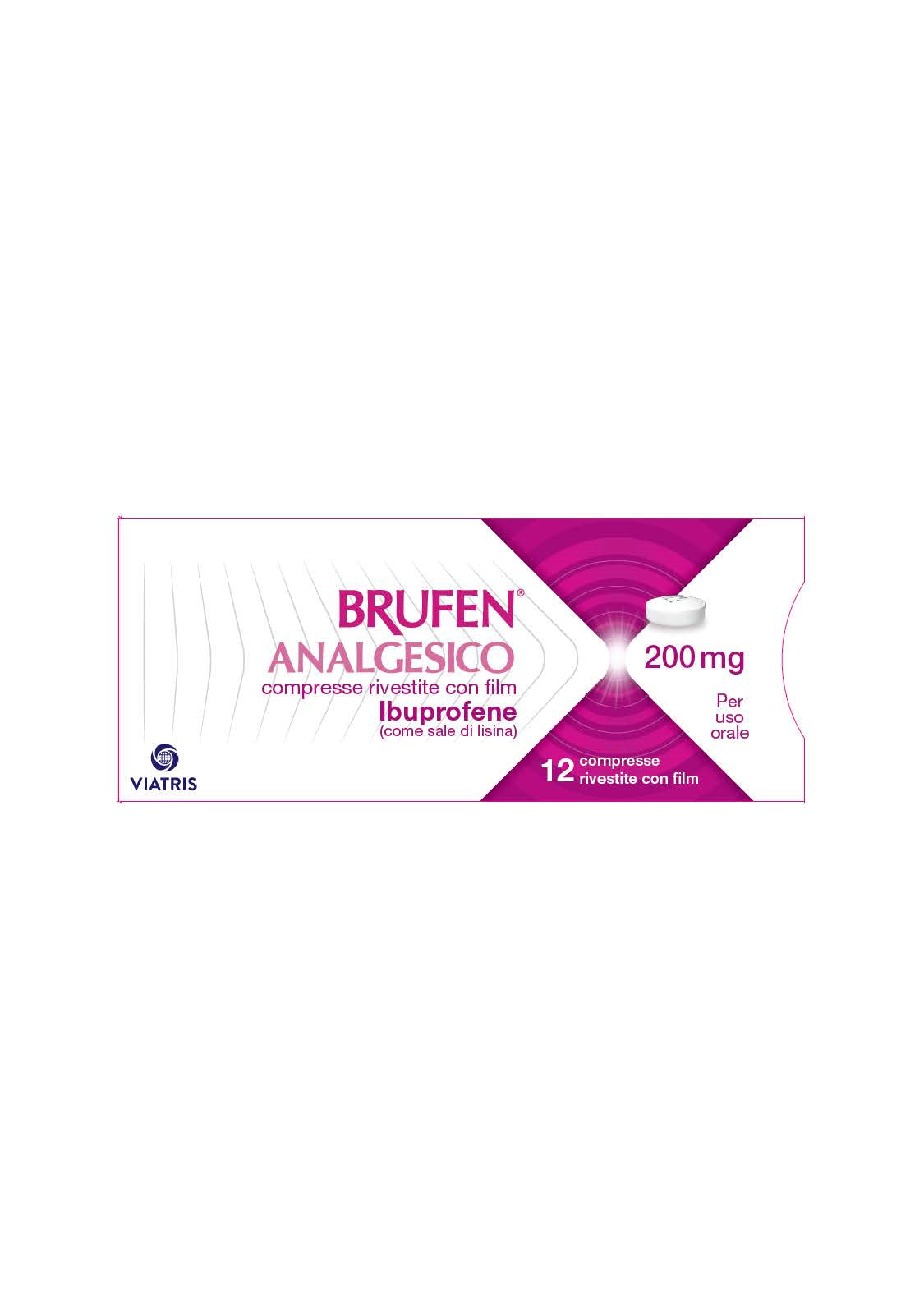
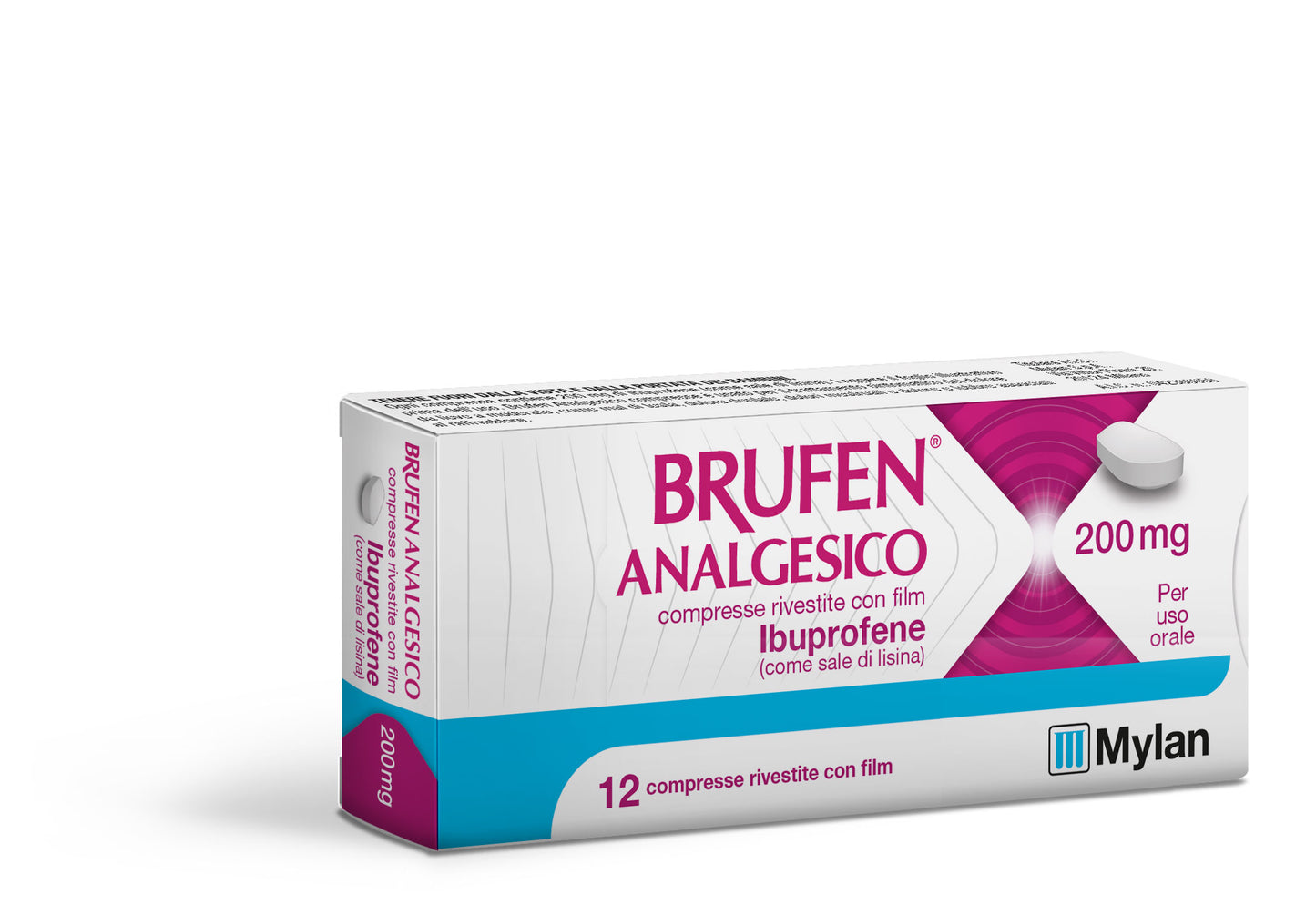
BRUFEN ANALGESIC 200 MG FILM-COATED TABLETS 12 TABLETS IN PVC/ACLAR/AL/VMCH BLISTER
BRUFEN ANALGESIC 200 MG FILM-COATED TABLETS 12 TABLETS IN PVC/ACLAR/AL/VMCH BLISTER


 Secure payment
 Discreet and sanitized package
 Fast and safe shipping


Description
Description
BRUFEN ANALGESIC 200 mg film-coated tablets
BRUFEN ANALGESIC 400 mg film-coated tablets
Ibuprofen (as lysine salt)
What is it and what is it used for?
BRUFEN ANALGESIC contains the active substance ibuprofen. It belongs to a group of medicines known as nonsteroidal anti-inflammatory drugs (NSAIDs). NSAIDs provide relief by modifying the body's response to pain and fever.
BRUFEN ANALGESICO tablets are used for the symptomatic treatment of mild to moderate pain, such as headache, dental pain, menstrual pain, and pain and fever associated with colds.
What you need to know before taking the medicine
Do not take BRUFEN ANALGESIC:
• if you are allergic to ibuprofen or any of the other ingredients of this medicine (listed in section 6);
• if you have suffered from an allergic reaction, such as asthma, difficulty breathing, swelling of the face, tongue or throat, hives, runny or itchy nose, caused by acetylsalicylic acid (ASA) or other NSAIDs;
• if you have (or have had two or more episodes of) stomach ulcer or bleeding;
• if you have had gastrointestinal perforation or bleeding while using NSAIDs;
• if you suffer from cerebrovascular bleeding or other active bleeding;
• if you suffer from blood formation disorders of unknown nature;
• if you have severe dehydration (caused by vomiting, diarrhoea or insufficient fluid intake);
• if you suffer from severe liver, kidney or heart failure;
• if you are in the last 3 months of pregnancy.
(Only 200 mg)
BRUFEN ANALGESIC is contraindicated in children under 6 years of age (less than 20 kg of body weight).
(Only 400 mg) BRUFEN ANALGESIC is contraindicated in adolescents under 40 kg of body weight or in children under 12 years of age.
Warnings and precautions
Talk to your doctor or pharmacist before taking BRUFEN ANALGESIC:
• if you have recently undergone major surgery;
• if you suffer or have suffered from asthma or an allergic disease, because breathing difficulties may occur;
• if you suffer from hay fever, nasal polyps, or chronic obstructive pulmonary disease, as there is an increased risk of allergic reactions. Allergic reactions may present as asthma attacks (so-called analgesic asthma), Quincke's edema, or hives;
• if you suffer from heart problems;
• if you have a history of gastrointestinal diseases (such as ulcerative colitis, Crohn's disease);
• if you suffer from systemic lupus erythematosus or mixed connective tissue disease (a disease affecting the skin, joints and kidneys);
• if you suffer from certain hereditary blood formation disorders (e.g. acute intermittent porphyria);
• if you suffer from blood clotting disorders;
• if you are taking other NSAIDs. Concomitant use with other NSAIDs, including specific cyclooxygenase-2 inhibitors, increases the risk of adverse reactions (see section "Other medicines and BRUFEN ANALGESIC", below) and should be avoided;
• if you have chickenpox it is advisable to avoid the use of BRUFEN ANALGESIC;
• if he is elderly;
• if you have an infection – see section “Infections” below.
Patients with kidney or liver problems should consult a doctor before taking ibuprofen tablets.
Anti-inflammatories such as ibuprofen may be associated with a small increased risk of heart attack ("myocardial infarction") or stroke, particularly when used in high doses.
Do not exceed the recommended dose or duration of treatment (see section 3).
You should discuss your treatment with your doctor or pharmacist before taking BRUFEN ANALGESICO, if:
• have heart problems, including heart failure, angina (chest pain), or if you have had a heart attack, bypass surgery, peripheral arterial disease (circulation problems in the legs or feet due to narrowed or blocked arteries), or any type of stroke (including a "mini-stroke" or transient ischemic attack, "TIA");
• have high blood pressure, diabetes, high cholesterol, have a family history of heart disease or stroke, or are a smoker.
Signs of an allergic reaction to ibuprofen have been reported, including breathing problems, swelling of the face and neck (angioedema), and chest pain. Stop taking BRUFEN ANALAGESICO immediately and contact your doctor or emergency medical services immediately if you notice any of these signs.
Skin reactions
Serious skin reactions, including exfoliative dermatitis, erythema multiforme, Stevens-Johnson syndrome, toxic epidermal necrolysis, drug reaction with eosinophilia and systemic symptoms (DRESS), and acute generalized exanthematous pustulosis (AGEP), have been reported in association with ibuprofen treatment.
Stop using BRUFEN ANALGESICO and contact your doctor immediately if you notice any of the symptoms related to these serious skin reactions described in section 4.
Infections
Brufen Analgesic may hide the symptoms of infections, such as fever and pain. Brufen Analgesic may therefore delay adequate treatment of the infection, which could increase the risk of complications. This has been observed in pneumonia caused by bacteria and in bacterial skin infections related to chickenpox. If you take this medicine while you have an infection and the symptoms of the infection persist or worsen, contact your doctor immediately.
Side effects can be minimized by using the lowest effective dose for the shortest period of time. Elderly people are at increased risk of side effects.
In general, the habitual use of painkillers (even of different types) can lead to serious and persistent kidney problems. This risk may increase during exercise, associated with salt loss and dehydration. Therefore, it should be avoided. There is a risk of impaired kidney function in dehydrated children and adolescents.
Prolonged use of any type of painkiller for headaches can worsen them. If this condition is present or suspected, medical advice should be sought and treatment should be discontinued. The diagnosis of medication-overuse headache should be suspected in patients who experience headaches despite (or because of) the regular use of headache medications.
If you take BRUFEN ANALGESIC for a long time, regular checks of your liver and kidney function, as well as your blood count, are required. Your doctor may require blood tests during treatment.
Possible side effects
Like all medicines, this medicine can cause side effects, although not everybody gets them.
Side effects can be minimized by taking the lowest dose for the shortest period of time necessary to relieve symptoms. Elderly people using this product are at greater risk of developing problems associated with side effects.
Medicines such as BRUFEN ANALGESICO may be associated with a small increased risk of a heart attack (myocardial infarction) or stroke.
Some of the side effects listed below are less frequent when the maximum daily dose is 1200 mg compared to high-dose therapy in rheumatic patients.
If you think you have any of the following side effects or symptoms, stop taking this medicine and seek immediate medical help:
• stomach or intestinal ulcers, sometimes with bleeding and perforation, vomiting blood or black, tarry stools (common may affect up to 1 in 10 people);
• kidney problems with blood in the urine which may be associated with kidney failure (uncommon: may affect up to 1 in 100 people);
• serious allergic reactions (very rare: may affect up to 1 in 10,000 people) such as:
- difficulty breathing or unexplained wheezing;
- dizziness or rapid heartbeat;
- drop in blood pressure causing shock;
- swelling of the face, tongue and throat;
• flat, target-shaped or circular reddish spots on the trunk, often with central blisters, peeling skin, and ulcers of the mouth, throat, nose, genitals, and eyes. These severe rashes may be preceded by fever and flu-like symptoms [exfoliative dermatitis, erythema multiforme, Stevens-Johnson syndrome, toxic epidermal necrolysis] (very rare: may affect up to 1 in 10,000 people);
• a serious skin condition that can affect the mouth and other parts of the body with symptoms including red, often itchy patches, similar to a measles rash, starting on the limbs and sometimes on the face and body. The patches may swell or progress to form raised, red spots with a pale center. Affected patients may have fever, sore throat, headache, and/or diarrhoea (very rare: may affect up to 1 in 10,000 people);
• severe flaking or peeling of the skin (very rare: may affect up to 1 in 10,000 people);
• widespread skin rash, high body temperature and swollen lymph nodes (DRESS syndrome) (not known: frequency cannot be estimated from the available data);
• inflammation of the pancreas with severe epigastric pain, often with nausea and vomiting (very rare: may affect up to 1 in 10,000 people);
• nausea, vomiting, loss of appetite, feeling generally unwell, fever, itching, yellowing of the skin and eyes, light-coloured stools, dark-coloured urine, which may be signs of hepatitis or liver failure (very rare: may affect up to 1 in 10,000 people);
• heart disorder with shortness of breath and swelling of the feet or legs due to fluid retention (heart failure) (not known: frequency cannot be estimated from the available data);
• aseptic meningitis (infection around the brain or spinal cord, with symptoms including: fever, nausea, vomiting, headache, stiff neck and extreme sensitivity to bright light and clouding of the mental state such that you are completely out of touch with your environment (very rare: may affect up to 1 in 10,000 people);
• heart attack ('myocardial infarction', very rare: may affect up to 1 in 10,000 people) or stroke (frequency not known: cannot be estimated from the available data);
• severe kidney damage (papillary necrosis), particularly with long-term use (rare: may affect up to 1 in 1,000 people);
• worsening of inflammation related to an infection (e.g. development of 'flesh-eating bacteria' syndrome) particularly with the use of other NSAIDs (very rare: may affect up to 1 in 10,000 people);
• Chest pain, which may be a sign of a potentially serious allergic reaction called Kounis syndrome (not known: frequency cannot be estimated from the available data).
Stop taking the medicine and tell your doctor if you experience:
Very common (may affect more than 1 in 10 people):
• indigestion or heartburn;
• abdominal pain (stomach pain) or other stomach abnormalities.
Not known (frequency cannot be estimated from the available data):
• visual disturbances;
• a widespread, red, scaly rash, with pustules and vesicles forming on the skin, mainly in the skin folds, trunk, and upper limbs, accompanied by fever at the start of treatment (acute generalized exanthematous pustulosis). Stop using BRUFEN ANALGESICO if you develop these symptoms and contact your doctor immediately. See also section 2.
Tell your doctor if any of the following side effects occur:
Very common (may affect more than 1 in 10 people):
• nausea, flatulence, diarrhea, constipation, vomiting.
Common (may affect up to 1 in 10 people):
• headache, drowsiness, dizziness, spinning sensation, tiredness, agitation, inability to sleep, irritability;
• gastric and duodenal ulcers, sometimes with bleeding and perforation, occult blood loss which can lead to anaemia, a condition in which there is a decrease in red blood cells (symptoms include tiredness, headache, shortness of breath during exercise, dizziness and paleness), black, tarry stools, vomiting blood, mouth ulcers and cold sores, inflammation of the colon (symptoms include diarrhoea, usually with blood and mucus, stomach pain and fever), worsening of inflammatory bowel disease, inflammation of the gut wall.
Uncommon (may affect up to 1 in 100 people):
• hives, itching, unusual bleeding or bruising under the skin, rash, asthma attack (sometimes with low blood pressure);
• runny or stuffy nose, sneezing, facial pain or pressure, difficulty breathing;
• inflammation of the stomach (symptoms include: pain, nausea, vomiting, vomiting blood, blood in the stool);
• increased sensitivity of the skin to the sun;
• swelling of the face, lips, mouth, tongue, or throat, which may cause difficulty swallowing or breathing, sometimes with high blood pressure;
• fluid retention in body tissues, especially in patients with hypertension or kidney problems.
Rare (may affect up to 1 in 1,000 people):
• a disease affecting the skin, joints and kidneys (lupus erythematosus syndrome);
• depression, confusion, hallucinations, mental illness with strange or disturbing thoughts or mood;
• persistent ringing, buzzing, hissing, whistling, or other noises in the ears;
• increased blood urea nitrogen, transaminases and alkaline phosphatase, decreased hemoglobin and hematocrit values, inhibition of platelet aggregation, prolongation of bleeding time, decreased serum calcium, increased serum uric acid, all observed with a blood test;
• loss of vision.
Very rare (may affect up to 1 in 10,000 people):
• rapid or irregular heartbeat (palpitations);
• increased fluid in body tissues;
• inflammation of the esophagus, narrowing of the intestine;
• liver disorders, liver damage (especially with long-term use), liver failure, yellowing of the skin and/or eyes, also called jaundice;
• serious skin infections, with soft tissue complications, may occur if you have chickenpox;
• fluid buildup in the lungs, symptoms include shortness of breath, which can be very severe and usually worsens when lying down.
Not known (frequency cannot be estimated from the available data):
• worsening of an inflammatory disease that may affect any part of the gastrointestinal tract (symptoms include pain, fever, diarrhea, and weight loss), worsening of inflammation of the colon (symptoms: diarrhea, usually with blood and mucus, stomach pain, fever);
• high blood pressure;
• unusual hair loss or baldness;
• menstrual disorders.
Reporting of side effects
If you experience any side effects, including any not listed in this leaflet, talk to your doctor or pharmacist. You can also report side effects directly via the national reporting system at: https://www.aifa.gov.it/content/segnalazionireazioni-avverse .
By reporting side effects you can help provide more information on the safety of this medicine.
BRUFEN
BRUFEN ANALGESIC 200 MG FILM-COATED TABLETS 12 TABLETS IN PVC/ACLAR/AL/VMCH BLISTER
BRUFEN ANALGESIC 200 MG FILM-COATED TABLETS 12 TABLETS IN PVC/ACLAR/AL/VMCH BLISTER
Couldn't load pickup availability
Product images are purely indicative and may not be fully representative of the packaging and product features, as they may vary in color, size, or content. Any decorations, gift wrapping, and items included in the images for product presentation purposes will not be shipped with orders. Product names, ingredients, and percentages indicated in the descriptions are purely indicative and may be subject to change or updates by the manufacturers. Due to the impossibility of updating these updates in real time, the photos and technical information of the products listed on farmaInnovation.it may differ from those shown on the label or otherwise disclosed by the manufacturers. The only identifying element is the MINSAN (Ministry of Health) code. Farmacia Barni, farmainnovation.it , does not guarantee the accuracy and timeliness of the information published and declines all responsibility for any errors, omissions, or failure to update it. farmainnovation.it assumes no responsibility for damages of any kind that may arise from accessing the published information.