
NUROFEN
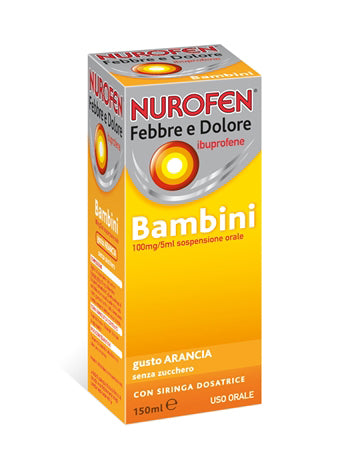
NUROFEN FEVER D CHILDREN 100 MG/5 ML ORAL SUSPENSION ORANGE FLAVOURED SUGAR FREE 150 ML BOTTLE WITH DOSING SYRINGE
NUROFEN FEVER D CHILDREN 100 MG/5 ML ORAL SUSPENSION ORANGE FLAVOURED SUGAR FREE 150 ML BOTTLE WITH DOSING SYRINGE

 Secure payment
 Discreet and sanitized package
 Fast and safe shipping


Description
Description
Nurofen Fever and Pain Children 100mg/5ml sugar-free orange-flavored oral suspension
Nurofen Fever and Pain Children 100mg/5ml sugar-free strawberry-flavored oral suspension
Ibuprofen
What is it and what is it used for?
Nurofen Fever and Pain contains ibuprofen, which belongs to a group of medicines called nonsteroidal anti-inflammatory drugs (NSAIDs), which work by reducing pain, fever, and inflammation.
Nurofen Fever and Pain is indicated in children aged 3 months to 12 years for the symptomatic treatment of fever, including post-vaccination fever, and mild to moderate pain (such as headache, toothache, sore throat, earaches).
What you need to know before taking the medicine
Signs of an allergic reaction to ibuprofen, including breathing problems, swelling of the face and neck area (angioedema), and chest pain, have been reported with ibuprofen.
Stop taking Nurofen Fever and Pain immediately and contact your doctor or emergency services immediately if you notice any of these signs.
Do not use Nurofen Fever and Pain if the child
- are allergic to ibuprofen or any of the other ingredients of this medicine (listed in section 6);
- you experience or have experienced in the past allergic reactions such as shortness of breath, rhinitis (runny nose), swelling of the face, lips and throat (angioedema) or hives, particularly if associated with nasal polyps and asthma, after taking other analgesics, other antipyretics, acetylsalicylic acid and other non-steroidal anti-inflammatory drugs (NSAIDs);
- suffer from severe kidney or liver disease (renal or hepatic failure);
- suffers from a serious heart disease (heart failure);
- suffer or have suffered from bleeding in the stomach and/or intestine (gastrointestinal haemorrhage) or perforation following previous treatments with NSAIDs;
- you suffer or have suffered from active or recurrent gastric/duodenal ulcers (peptic ulcers) or bleeding (at least two distinct episodes of proven ulceration or bleeding);
- if you are taking other non-steroidal anti-inflammatory drugs (NSAIDs, including selective COX-2 inhibitors) (see section "Other medicines and Nurofen Fever and Pain");
- if you have any disease that increases the risk of bleeding;
- in case of unclear blood disorders;
- if you are severely dehydrated, for example if you have had severe vomiting, diarrhoea or if you drink very little;
- is less than 3 months old or weighs less than 5.6 kg;
- is in the last trimester of pregnancy (see section "Pregnancy and breastfeeding").
Warnings and precautions
Talk to your doctor or pharmacist before using Nurofen Fever and Pain if your child:
• you suffer or have suffered from an allergy to medicines used to treat fever, pain and inflammation (non-steroidal anti-inflammatory drugs) and if you suffer from difficulty breathing (asthma), seasonal allergies (hay fever), polyps in the nose, if you have severe breathing or chest problems, e.g. chronic obstructive pulmonary disease, swelling of the face, lips and throat (angioedema);
• you are taking other medicines used to treat pain, to lower fever and/or to treat inflammation (non-steroidal anti-inflammatory drugs, NSAIDs including COX-2 inhibitors) (see section "Other medicines and Nurofen Fever and Pain");
• have suffered from stomach and intestinal disorders (history of ulcers), especially if complicated by bleeding or perforation, as an increase in gastrointestinal bleeding and perforation may occur. In these cases, your doctor will advise you to start treatment with the lowest available dose and possibly the concomitant use of stomach-protective medicines (misoprostol or proton pump inhibitors). This should also be considered if you are taking low-dose aspirin or other drugs that can increase the risk of stomach and intestinal diseases (see section "Other medicines and Nurofen Fever and Pain"). During treatment with all NSAIDs, bleeding, ulceration and perforation of the stomach or intestine, which can be fatal, may occur at any time, with or without warning symptoms or a previous history of serious gastrointestinal events. Therefore, inform your doctor of any uncommon gastrointestinal symptoms (especially gastrointestinal bleeding), particularly in the initial stages of treatment. If gastrointestinal bleeding or ulceration occurs, stop treatment with Nurofen Fever and Pain and contact your doctor;
• you suffer or have suffered from an inflammatory bowel disease (ulcerative colitis, Crohn's disease) as these diseases may worsen (see section "Possible side effects");
• if you are taking medicines that may increase the risk of ulcers or bleeding, such as medicines used to treat inflammation and certain immune system diseases (oral corticosteroids), anticoagulants such as warfarin, medicines that may have an antiplatelet effect such as aspirin, medicines to treat depression (selective serotonin reuptake inhibitors) (see section "Other medicines and Nurofen Fever and Pain");
• have heart disease (uncontrolled hypertension, congestive heart failure, established ischemic heart disease, peripheral arterial disease) or have had reduced blood flow to the brain (stroke), or if you think your child may be at risk of these conditions (for example, if you have high blood pressure, high levels of sugar (diabetes) or fat in the blood, or if you smoke). Medicines such as Nurofen Fever and Pain may be associated with a small increased risk of heart attack or reduced blood flow to the brain: the risk is more likely at high doses and with prolonged therapy. Do not exceed the recommended dose or duration of treatment;
• suffer or have suffered from high blood pressure and/or severe heart disease (heart failure) since fluid retention, high blood pressure and swelling (edema) have been reported in association with NSAID therapy;
• have an infection (see section "Infections" below);
• have chickenpox, in which case it is advisable to avoid using Nurofen Fever and Pain.
The use of Nurofen Fever and Pain requires adequate precautions, especially if the child:
• suffer or have suffered from asthma because it could worsen breathing difficulties;
• suffers from blood clotting problems or high blood pressure;
• suffers from kidney, heart, liver disease, if he or she takes drugs that increase urine production (diuretics), or if he or she has undergone major surgery resulting in fluid loss, as in these cases your doctor will advise you to perform periodic blood and urine tests on your child;
• has undergone major surgery;
• suffers from certain congenital diseases that affect blood formation (for example acute intermittent porphyria); is dehydrated (for example due to fever, vomiting or diarrhoea), in this case rehydrate him before starting and during treatment to avoid the risk of altering kidney function.
During prolonged treatment with Nurofen Fever and Pain, you must pay particular attention and inform your doctor immediately if the following occur:
• signs or symptoms of ulceration or bleeding in the stomach and intestines (e.g. black, foul-smelling stools, vomiting blood);
• signs or symptoms of liver damage (e.g. hepatitis and jaundice);
• signs or symptoms of kidney damage (e.g. increased urine production, blood in the urine);
• visual disturbances (blurred or reduced vision, areas of complete or partial blindness, alteration of color perception);
• symptoms such as frequent or daily headaches despite regular use of headache medicines, as they may be caused by excessive use of these medicines;
• symptoms such as headache, disorientation, nausea, vomiting, stiff neck and fever as these could be symptoms due to aseptic meningitis (more frequent if the child suffers from systemic lupus erythematosus or other collagen diseases).
Skin reactions
Serious skin reactions, including exfoliative dermatitis, erythema multiforme, Stevens-Johnson syndrome, toxic epidermal necrolysis, drug reaction with eosinophilia and systemic symptoms (DRESS), and acute generalized exanthematous pustulosis (AGEP), have been reported in association with ibuprofen treatment. Stop using Nurofen Fever and Pain and contact your doctor immediately if you notice any of the symptoms related to these serious skin reactions described in section 4.
Infections
Nurofen Fever and Pain may mask the symptoms of infections such as fever and pain. Therefore, Nurofen Fever and Pain may delay adequate treatment of the infection, which could increase the risk of complications. This has been observed in pneumonia caused by bacteria and bacterial skin infections related to chickenpox. If you take this medicine while you have an infection and the symptoms persist or worsen, contact your doctor immediately.
Children and adolescents
In dehydrated children and adolescents there is a risk of impaired renal function.
Possible side effects
Like all medicines, this medicine can cause side effects, although not everybody gets them.
If your child experiences any of the following side effects, STOP taking Nurofen Fever and Pain and contact your doctor:
• allergic reactions, including serious ones, which may include: hives, itching, purpura, swelling of the face, mouth and throat (angioedema), difficulty breathing (bronchospasm or dyspnoea), abnormal heartbeat (tachycardia), low blood pressure (hypotension), anaphylaxis, severe shock and worsening of asthma;
• aseptic meningitis with symptoms such as disorientation, headache, nausea, vomiting, stiff neck and fever (more frequent if the child suffers from systemic lupus erythematosus or other collagen diseases);
• flat, target-shaped or circular reddish spots on the trunk, often with central blisters, peeling skin, and ulcers of the mouth, throat, nose, genitals, and eyes. These severe rashes may be preceded by fever and flu-like symptoms [exfoliative dermatitis, erythema multiforme, Stevens-Johnson syndrome, toxic epidermal necrolysis];
• widespread skin rash, high body temperature and swollen lymph nodes (DRESS syndrome);
• widespread, red, scaly rash with bumps under the skin and blisters, accompanied by fever. Symptoms usually appear at the start of treatment (acute generalized exanthematous pustulosis).
Additional side effects include:
Uncommon (may affect up to 1 in 100 people):
• headache, dizziness, drowsiness and convulsions;
• stomach pain, nausea and difficulty digesting (dyspepsia);
• skin rashes;
• vision disorders.
Rare (may affect up to 1 in 1,000 people):
• cystitis, rhinitis;
• depression, insomnia, difficulty concentrating, mood swings, hearing problems;
• cerebrovascular hemorrhage;
• dry eyes;
• perception of one's heartbeat (palpitations);
• diarrhea, flatulence, dry mouth, constipation and vomiting;
• hair loss (alopecia);
• the skin becomes sensitive to light;
• severe kidney disease including tubular necrosis, glomerular nephritis, blood in the urine and increased urine output;
• decrease in hematocrit levels.
Very rare (may affect up to 1 in 10,000 people):
• reduction in the number of blood cells (anemia, leukopenia, thrombocytopenia, eosinophilia, pancytopenia, agranulocytosis) - the first signs are: fever, sore throat, superficial mouth ulcers, flu-like symptoms, severe tiredness, nosebleeds and hemorrhages;
• signs or symptoms of ulceration or bleeding of the stomach and intestines, black and foul-smelling stools, vomiting blood;
• lesions with bleeding from the mouth, heartburn (gastritis);
• simultaneous kidney and liver disease (hepatorenal syndrome), death of some liver cells (liver necrosis), liver disease (liver failure, liver dysfunction, hepatitis, jaundice);
• severe kidney disease (acute renal failure, papillary necrosis) particularly following long-term treatment, associated with an increase in the concentration of urea in the blood and swelling (edema);
• decrease in hemoglobin levels in the blood;
• heart attack (myocardial infarction);
• serious skin infections and soft tissue complications during chickenpox infection;
• worsening of infection-related inflammation (e.g., necrotizing fasciitis) associated with the use of some nonsteroidal anti-inflammatory drugs (NSAIDs). If signs of an infection appear or worsen, you should contact your doctor immediately to assess whether anti-infective/antibiotic therapy is necessary.
Not known (frequency cannot be estimated from the available data):
• chest pain, which may be a sign of a potentially serious allergic reaction called Kounis syndrome;
• irritability;
• fluid retention and decreased appetite;
• abnormal perception of noises such as buzzing, ringing or rustling (tinnitus);
• severe heart disease (heart failure) and swelling (edema);
• increased blood pressure (hypertension) and reduced blood flow to the body (shock);
• respiratory tract disorders including asthma, obstruction of the larynx, shortness of breath (bronchospasm), temporary cessation of breathing (apnoea) and difficulty breathing (dyspnoea);
• worsening of inflammatory bowel diseases (colitis and Crohn's disease), inflammation of the pancreas (pancreatitis), inflammation of the duodenum (duodenitis), inflammation of the esophagus (esophagitis);
• a serious skin reaction known as DRESS syndrome may occur. Symptoms of DRESS include: rash, fever, swollen lymph nodes, and an increase in eosinophils (a type of white blood cell);
• a widespread, red, scaly rash with pustules under the skin and blisters, mainly located in the skin folds, trunk, and upper limbs, accompanied by fever at the start of treatment (acute generalized exanthematous pustulosis). Stop using Nurofen Fever and Pain if you develop these symptoms and contact your doctor immediately. See also section 2.
Use of ibuprofen, especially at high doses (2400 mg/day), may be associated with a modest increased risk of heart attack (myocardial infarction) or stroke.
NUROFEN
NUROFEN FEVER D CHILDREN 100 MG/5 ML ORAL SUSPENSION ORANGE FLAVOURED SUGAR FREE 150 ML BOTTLE WITH DOSING SYRINGE
NUROFEN FEVER D CHILDREN 100 MG/5 ML ORAL SUSPENSION ORANGE FLAVOURED SUGAR FREE 150 ML BOTTLE WITH DOSING SYRINGE
Couldn't load pickup availability
Product images are purely indicative and may not be fully representative of the packaging and product features, as they may vary in color, size, or content. Any decorations, gift wrapping, and items included in the images for product presentation purposes will not be shipped with orders. Product names, ingredients, and percentages indicated in the descriptions are purely indicative and may be subject to change or updates by the manufacturers. Due to the impossibility of updating these updates in real time, the photos and technical information of the products listed on farmaInnovation.it may differ from those shown on the label or otherwise disclosed by the manufacturers. The only identifying element is the MINSAN (Ministry of Health) code. Farmacia Barni, farmainnovation.it , does not guarantee the accuracy and timeliness of the information published and declines all responsibility for any errors, omissions, or failure to update it. farmainnovation.it assumes no responsibility for damages of any kind that may arise from accessing the published information.