
VOLTADVANCE
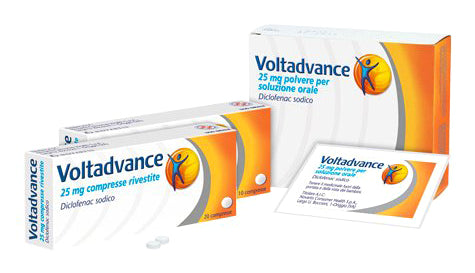
VOLTADVANCE 25 MG FILM-COATED TABLETS 10 TABLETS IN OPA/AL/PVC/AL BLISTER
VOLTADVANCE 25 MG FILM-COATED TABLETS 10 TABLETS IN OPA/AL/PVC/AL BLISTER

 Secure payment
 Discreet and sanitized package
 Fast and safe shipping


Description
Description
Voltadvance 25 mg film-coated tablets
Voltadvance 25 mg powder for oral solution
Diclofenac sodium
What is it and what is it for?
Voltadvance contains the active ingredient diclofenac sodium, which belongs to the class of medicines known as nonsteroidal anti-inflammatory drugs (NSAIDs). Voltadvance works by reducing pain and inflammation.
Voltadvance is indicated for the treatment of pain of various origins and natures, such as:
• joint pain
• back pain (lumbago)
• muscle pain, including stiff neck
• heachache
• toothache
• menstrual cramps
Talk to your doctor if you do not feel better or if you feel worse after 2-3 days of treatment.
What you need to know before taking the medicine
Do not take Voltadvance
• if you are allergic to diclofenac sodium, acetylsalicylic acid or any other non-steroidal anti-inflammatory drug (NSAID) or any of the other ingredients of this medicine (listed in section 6)
• if you have an ongoing ulcer, bleeding or perforation of the stomach or intestine
• if you have had bleeding (haemorrhage) from the stomach or intestine or perforation after previous treatment with NSAIDs
• if you have had bleeding or ulcers that occur repeatedly (two or more distinct episodes of proven ulceration or bleeding)
• if you have a severe form of liver or kidney failure
• if you have a known heart disease and/or cerebrovascular disease, e.g., you have had a heart attack, stroke, mini-stroke (TIA) or blockage of the blood vessels to the heart or brain or an operation to remove or avoid such blockages
• if you suffer or have suffered from blood circulation problems (peripheral arterial disease)
• if you think you may be allergic to diclofenac sodium, acetylsalicylic acid, ibuprofen, or any other NSAID or any other ingredient in this medicine. Signs of a hypersensitivity reaction include swelling of the face, lips, tongue, and/or throat with difficulty swallowing (angioedema), breathing problems (difficulty breathing, asthma), chest pain, acute rhinitis (runny nose), skin rash (hives), or any other type of allergic reaction.
• if you have an alteration in the production of blood cells
• if you are taking high doses of medicines that increase urine production (diuretics) (see "Other medicines and Voltadvance")
• if your stools are dark or contain blood
• if you are breastfeeding (see section "Pregnancy, breastfeeding and fertility")
• if you are in the last three months of pregnancy (see section "Pregnancy, breastfeeding and fertility")
• if you are under 14 years old
Warnings and precautions
Talk to your doctor or pharmacist before taking Voltadvance.
Before taking Voltadvance, make sure your doctor knows :
• if you have asthma
• if you have seasonal colds caused by allergies (allergic rhinitis), swelling of the nasal mucosa (e.g. nasal polyps)
• if you have chronic obstructive pulmonary disease or chronic respiratory tract infections
• if you have liver or kidney problems, unless you have severe liver or kidney failure, as in these cases you should not take Voltadvance (see section 2 "Do not take Voltadvance"). If you are in any doubt, ask your doctor.
• if you have hepatic porphyria
• if you have ulcerative colitis or Crohn's disease because these conditions may get worse
• if you are using medicines that increase urine production (diuretics) or other medicines that may affect the way your kidneys work
• if you have low body fluid volume (for example before or after major surgery)
• if you are undergoing or have undergone major surgery
• if you have blood clotting defects (haemostasis defects)
• if you have or have had heart problems
• if he smokes
• if you suffer from diabetes
• if you suffer from angina, blood clots, high blood pressure, increased cholesterol or increased triglycerides
• if you experience signs or symptoms of heart or blood vessel problems such as chest pain, shortness of breath, weakness or difficulty speaking, contact your doctor immediately
• if you have stomach or intestinal problems, unless you have one or more conditions why you should not take Voltadvance (see section "Do not take Voltadvance")
• if you are taking medicines that may increase the risk of bleeding, ulceration and perforation such as acetylsalicylic acid (e.g. aspirin) and other NSAIDs, corticosteroids given by mouth, injection or rectally (e.g. cortisone), medicines to thin the blood (anticoagulants and antiplatelet drugs), selective serotonin reuptake inhibitors (antidepressants) (see section "Other medicines and Voltadvance")
• Tell your doctor if you have recently had or are about to have surgery on your stomach or intestinal tract before receiving/taking/using Voltadvance, as Voltadvance can sometimes worsen wound healing in the intestine following surgery.
In these cases, your doctor will monitor you closely and periodically reassess the need for treatment with Voltadvance. Additionally, your doctor may perform periodic tests (such as monitoring your kidney or liver function) to evaluate your condition while you're on Voltadvance.
Stop treatment and tell your doctor if during treatment with Voltadvance you develop : • gastrointestinal bleeding or ulceration
• skin reactions, because serious skin reactions which may even be fatal have been reported very rarely (see section 4.8)
• mucosal lesions or any other signs of allergic reaction
• fluid retention and swelling from fluid accumulation (edema)
• signs and symptoms of liver problems or if liver function parameters are abnormal (visible in blood tests)
• unusual stomach and intestinal symptoms
• worsening of headaches because prolonged use of medicines to reduce headaches can in some cases make them worse
• symptoms of an infection (e.g. headache, fever) or if you notice worsening of an infection as Voltadvance may hide the signs and symptoms of infection.
In these cases, your doctor will evaluate whether to continue or discontinue treatment with Voltadvance.
Other important information :
• Gastrointestinal bleeding, ulceration, or perforation, which can even cause death, may occur during treatment with NSAIDs, including diclofenac. The risk of gastrointestinal bleeding is higher with high doses of NSAIDs and in patients who have had ulcers, especially if complicated by bleeding or perforation. You should take the lowest effective dose of diclofenac to reduce the risk of gastrointestinal toxicity, and your doctor may also prescribe medications (e.g., misoprostol or proton pump inhibitors) to protect the gastrointestinal mucosa.
• Medicines such as Voltadvance may be associated with a small increased risk of heart attack (myocardial infarction) or stroke. Any risk is more likely with high doses or prolonged treatment.
• Side effects can be minimised by using the lowest effective dose for the shortest duration necessary (see section 3 "How to take Voltadvance")
• Avoid using diclofenac during treatment with other NSAIDs administered by mouth, injection and rectally, including selective cyclooxygenase-2 inhibitors, because it increases the possibility of you experiencing side effects.
Children and adolescents
Voltadvance is contraindicated in children and adolescents under 14 years of age.
Elderly patients
Elderly patients are more likely to experience adverse reactions, especially stomach or intestinal bleeding and perforation, which are usually more severe and can be fatal.
If you are elderly, you should take the lowest dose of Voltadvance.
As a precaution, your doctor may check your kidney function and prescribe medications that work by protecting the gastrointestinal mucosa, such as misoprostol or proton pump inhibitors.
Tell your doctor about any unusual stomach and intestinal symptoms.
Possible side effects
Like all medicines, this medicine can cause side effects, although not everybody gets them.
If any of these effects occur during treatment with Voltadvance, it is advisable to stop taking the medicine and consult your doctor.
Undesirable effects can be minimized by using the lowest effective dose for the shortest duration necessary.
Some side effects can be serious.
Stop taking Voltadvance and tell your doctor immediately if you notice:
• Mild abdominal cramps and tenderness that occur shortly after starting treatment with Voltadvance, followed by rectal bleeding or bloody diarrhoea usually within 24 hours of the onset of abdominal pain (frequency not known, cannot be estimated from the available data).
• Chest pain, which may be a sign of a potentially serious allergic reaction called Kounis syndrome.
Common side effects (may affect up to 1 in 10 people)
• headache, dizziness, vertigo
• nausea, vomiting
• diarrhea, gas (flatulence)
• problems with digestion (dyspepsia), abdominal pain
• lack or reduction of appetite (anorexia)
• alterations in tests to evaluate liver function (increased transaminases)
• skin rash
Uncommon side effects (may affect up to 1 in 100 people)
These effects occurred after long-term treatment and with a high dose (150 mg per day).
• heart attack
• heart problems (heart failure)
• awareness of one's heartbeat (palpitations)
• chest pain
Rare side effects (may affect up to 1 in 1,000 people) • allergic reactions, severe allergic reactions even after the first use of the medicine (anaphylactic and anaphylactoid reactions) including hypotension and collapse (shock)
• drowsiness
• asthma, difficulty breathing (dyspnea)
• inflammation of the stomach (gastritis), bleeding from the stomach or intestines, vomiting blood (haematemesis), ulcer of the stomach or intestines with or without bleeding and perforation (with possible inflammation of the peritoneum called peritonitis), narrowing of the gastrointestinal tract (stenosis)
• diarrhea accompanied by bleeding, dark stools with blood (melena)
• dry mouth and mucous membranes
• inflammation of the liver (hepatitis), yellowing of the skin, mucous membranes and eyes (jaundice), liver disorders
• hives
• swelling from fluid accumulation (edema).
Very rare side effects (may affect up to 1 in 10,000 people)
• abnormal values in blood tests
- reduction in the number of platelets (thrombocytopenia)
- reduction in the number of white blood cells (leukopenia, agranulocytosis)
- anemia (including hemolytic and aplastic anemia)
• abnormal values in urine tests
- presence of blood in the urine (hematuria)
- presence of proteins in the urine (proteinuria)
• swelling of the skin and mucous membranes (angioedema) including facial edema
• disorientation, depression, insomnia, nightmares, irritability, severe mental changes (psychotic reactions)
• worsening of memory, convulsions, anxiety, tremors
• alteration of sensation in the limbs or other parts of the body (paraesthesia)
• taste alterations
• inflammation of the membranes covering the brain and spinal cord (aseptic meningitis), damage to the blood vessels of the brain (cerebrovascular accidents)
• vision disturbances, blurred vision, double vision (diplopia)
• ringing or buzzing in the ears (tinnitus), worsening hearing
• high blood pressure (hypertension)
• inflammation of the blood vessels (vasculitis)
• pneumonia
• inflammation of the colon (colitis) including colitis accompanied by bleeding and worsening of ulcerative colitis or Crohn's disease
• constipation (constipation)
• inflammation of the mucosa of the mouth (stomatitis) including stomatitis with ulcers
• inflammation of the tongue (glossitis)
• problems with the esophagus, narrowing of the intestine (intestinal diaphragm disease)
• inflammation of the pancreas (pancreatitis)
• very severe and sudden form of hepatitis (fulminant hepatitis), liver necrosis, impairment of liver function (liver failure)
• skin reactions ranging from mild to life-threatening (bullous eruptions, eczema, erythema, erythema multiforme, Stevens-Johnson syndrome, toxic epidermal necrolysis (Lyell's syndrome), exfoliative dermatitis)
• appearance of red-brown spots on the skin (purpura), Henoch-Schonlein purpura, itching
• hair loss
• appearance of spots or redness on the skin following exposure to sunlight or sunlamps
• impaired kidney function (acute renal failure), nephrotic syndrome, interstitial nephritis, renal papillary necrosis.
Side effects with unknown frequency (frequency cannot be estimated from the available data):
• sudden, tight chest pain which may be a symptom of a serious allergic reaction (Kounis syndrome) Medicines such as Voltadvance may be associated with a small increased risk of heart attack (heart attack) or stroke (see "Warnings and precautions" above).
Reporting of side effects
If you experience any side effects, including any not listed in this leaflet, talk to your doctor or pharmacist. You can also report side effects directly via the national reporting system at: https://www.aifa.gov.it/content/segnalazionireazioni-avverse .
By reporting side effects you can help provide more information on the safety of this medicine.
VOLTADVANCE
VOLTADVANCE 25 MG FILM-COATED TABLETS 10 TABLETS IN OPA/AL/PVC/AL BLISTER
VOLTADVANCE 25 MG FILM-COATED TABLETS 10 TABLETS IN OPA/AL/PVC/AL BLISTER
Couldn't load pickup availability
Product images are purely indicative and may not be fully representative of the packaging and product features, as they may vary in color, size, or content. Any decorations, gift wrapping, and items included in the images for product presentation purposes will not be shipped with orders. Product names, ingredients, and percentages indicated in the descriptions are purely indicative and may be subject to change or updates by the manufacturers. Due to the impossibility of updating these updates in real time, the photos and technical information of the products listed on farmaInnovation.it may differ from those shown on the label or otherwise disclosed by the manufacturers. The only identifying element is the MINSAN (Ministry of Health) code. Farmacia Barni, farmainnovation.it , does not guarantee the accuracy and timeliness of the information published and declines all responsibility for any errors, omissions, or failure to update it. farmainnovation.it assumes no responsibility for damages of any kind that may arise from accessing the published information.