
ZERINOL
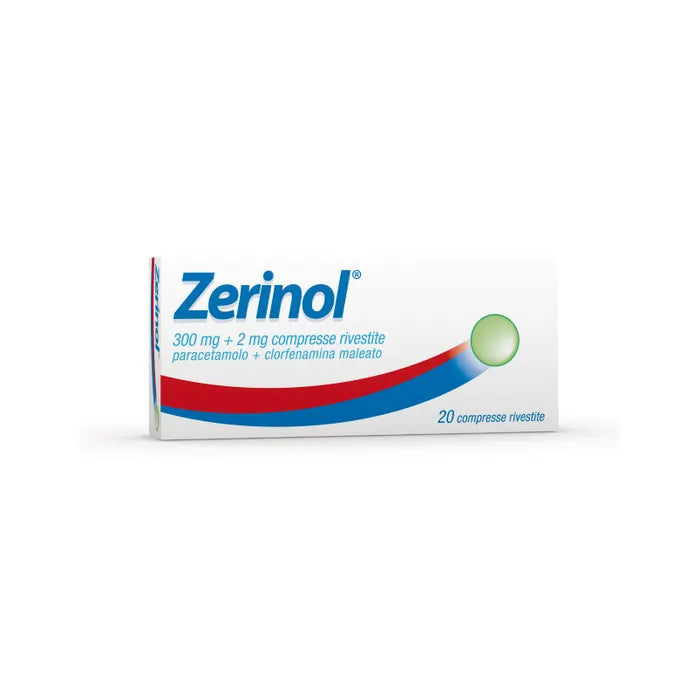
ZERINOL "300 MG + 2 MG COATED TABLETS" 20 TABLETS"
ZERINOL "300 MG + 2 MG COATED TABLETS" 20 TABLETS"

 Secure payment
 Discreet and sanitized package
 Fast and safe shipping


Description
Description
Zerinol 300 mg + 2 mg coated tablets
Paracetamol + Chlorphenamine maleate
What is it and what is it for?
Zerinol is an analgesic (pain reliever) and antipyretic (fever reducer) that contains the active ingredients paracetamol and chlorphenamine maleate.
Zerinol is used to treat cold and flu symptoms in adults.
Contact your doctor if you do not feel better or if you feel worse after 3 days.
What you need to know before taking the medicine
Do not take Zerinol
- if you are allergic to paracetamol or chlorphenamine maleate or any of the other ingredients of this medicine (listed in section 6) or to other antihistamines (substances similar to chlorphenamine, i.e. medicines used to treat allergies);
- during pregnancy and breastfeeding;
- if you suffer from severe haemolytic anaemia (a disease caused by the destruction of red blood cells);
- if you have a deficiency of a certain enzyme called glucose-6-phosphate dehydrogenase, the lack of which can cause haemolytic anaemia;
- if you suffer from severe hepatocellular insufficiency (disease associated with alteration of liver function);
- if you suffer from glaucoma (an eye disease often associated with increased fluid pressure within the eye);
- in case of prostatic hypertrophy (disease characterized by an increase in the volume of the prostate);
- in case of bladder neck obstruction (urinary bladder obstruction);
- in case of pyloric, duodenal and other gastrointestinal tract stenosis (gastrointestinal diseases characterized by narrowing of specific parts of the digestive tract);
- in case of urogenital stenosis (narrowing of the urinary and reproductive organs);
- if you are or have been treated in the previous two weeks with monoamine oxidase inhibitors (MAOIs) (see section "Other medicines and Zerinol").
Warnings and precautions
Talk to your doctor or pharmacist before taking Zerinol.
If you have glucose-6-phosphate dehydrogenase (G6PD) deficiency (may lead to haemolytic anaemia) You should not take this medicine for more than 3 consecutive days without consulting your doctor.
After a short period of treatment without noticeable results, consult your doctor. If you have a fever for more than three days, or if your symptoms do not improve or new symptoms appear within three days, or if they are accompanied by high fever, exanthema (a rash accompanied by redness of the skin), excessive mucus, and a persistent cough, consult your doctor for a correct diagnosis.
Paracetamol
While taking paracetamol, before taking any other medicine, you must check that it does not contain paracetamol, since if paracetamol is taken in high doses, serious side effects can occur (see also the section "If you take more Zerinol than you should").
Also, before combining any other medicine, contact your doctor (see also the paragraph "Other medicines and Zerinol").
Before starting therapy with Zerinol, do not take any medicines whose concomitant use is not recommended (see section "Other medicines and Zerinol").
High or prolonged doses of the product can cause hepatopathy (liver disease) which is high-risk for you (see also the paragraph "If you take more Zerinol than you should") and alterations to the kidneys and blood, even serious ones.
Serious skin reactions: Life-threatening skin reactions such as Stevens-Johnson syndrome (SJS), toxic epidermal necrolysis (TEN), acute generalized exanthematous pustulosis (AGEP), fixed drug eruption, and exfoliative dermatitis have been reported with paracetamol use. If symptoms or signs of these serious skin reactions occur (e.g., progressive skin redness associated with blisters or mucosal lesions), discontinue Zerinol treatment immediately and contact the nearest hospital.
While taking Zerinol, tell your doctor immediately if:
If you have serious illnesses, including severe kidney failure or sepsis (when bacteria and their toxins circulate in the blood, causing organ damage), malnutrition, chronic alcoholism, or if you are also taking flucloxacillin (an antibiotic). A serious condition called metabolic acidosis (an abnormality of the blood and fluids) has been reported in patients with these conditions when paracetamol is used at regular doses over a prolonged period or when paracetamol is taken in combination with flucloxacillin. Symptoms of metabolic acidosis may include severe breathing difficulties with rapid, deep breathing, drowsiness, nausea, and vomiting.
flucloxacillin. Symptoms of metabolic acidosis may include: severe breathing difficulties with rapid, deep breathing, drowsiness, nausea, and vomiting.
episodes with rapid deep breathing, drowsiness, nausea and vomiting.
Use caution with Zerinol if you are allergic to aspirin and/or nonsteroidal anti-inflammatory drugs (NSAIDs).
Since serious allergic reactions to paracetamol (e.g. anaphylactic shock, see also the section "Possible side effects") have been observed, at the first signs of an allergic reaction following the use of Zerinol, stop treatment and consult your doctor.
Zerinol should be used with caution and after medical evaluation in cases of chronic alcoholism, excessive alcohol intake (3 or more alcoholic drinks per day), eating disorders (anorexia, bulimia, cachexia, chronic malnutrition), dehydration, decreased circulating blood volume (hypovolemia), liver diseases such as mild to moderate liver failure and Gilbert's syndrome, severe renal insufficiency.
Chlorphenamine maleate
Zerinol contains an antihistamine (chlorphenamine). At typical doses, antihistamines have side effects that vary greatly from person to person and from drug to drug and should be used with caution in people with high blood pressure, heart disease, or thyroid disease. The most common side effect is sedation (physical and mental relaxation), which may manifest as drowsiness (see also the sections "Driving and using machines" and "Side effects"). Children and the elderly are more susceptible to this type of side effect.
Chlorphenamine may cause photosensitivity (an allergic skin reaction following exposure to light). Patients with renal or hepatic impairment: If you have renal or mild to moderate hepatic impairment, use this medicine with caution.
Elderly: Due to their increased sensitivity to the drug, elderly patients should adhere to the recommended dosages. Elderly patients treated with antihistamines are more likely to experience side effects such as dizziness, sedation, confusion, and hypotension. Elderly patients are particularly sensitive to the anticholinergic side effects of antihistamines, such as dry mouth, constipation, and urinary retention (especially in men).
Elderly patients with mental disorders (such as confusion, delirium, dementia, impairment of cognitive abilities such as memory and reasoning) should avoid the use of Zerinol due to adverse effects on the central nervous system.
Possible side effects
Like all medicines, this medicine can cause side effects, although not everybody gets them.
For the following side effects, the frequency cannot be established based on the available data (frequency not known).
Serious condition that can make the blood more acidic (called metabolic acidosis), in patients with a serious illness who use paracetamol (see section 2).
If you experience any of the following symptoms, STOP using Zerinol immediately and contact your doctor or the nearest hospital where you will be given appropriate and specific treatment:
- serious skin reactions manifested by skin rash, some of them fatal (including Stevens-Johnson syndrome and toxic epidermal necrolysis, acute generalized exanthematous pustulosis);
- allergic reactions such as:
- angioedema (sudden swelling of the skin or mucous membranes);
- laryngeal edema (swelling of the larynx);
- anaphylactic shock (severe allergic reaction).
Side effects affecting the blood :
- thrombocytopenia (reduction in the number of platelets in the blood);
- neutropenia (reduction in the number of neutrophils in the blood);
- leukopenia (reduction in the number of white blood cells in the blood);
- haemolytic anaemia (decrease in the amount of haemoglobin and red blood cells), particularly in patients with glucose-6-phosphate dehydrogenase deficiency;
- agranulocytosis (reduction in the number of granulocytes in the blood);
- pancytopenia (reduction in the number of all cells present in the blood);
- excess acid in the blood due to the presence of too much pyroglutamic acid resulting from low glutathione levels.
Nervous system disorders such as:
- sedation;
- drowsiness;
- asthenia (weakness);
- vertigo (dizziness);
- headache (headache);
- inability to concentrate;
- abnormal coordination;
- confusion.
Skin reactions of various types and severity have been reported with the use of paracetamol, including cases of:
- rash (skin eruption);
- hives (appearance of red spots on the skin);
- severe skin reactions such as Stevens-Johnson syndrome (SJS), toxic epidermal necrolysis (TEN), acute generalized exanthematous pustulosis (AGEP), fixed drug eruption and exfoliative dermatitis;
- photosensitization (allergic skin reaction following exposure to light).
Other side effects may include:
- blurred vision;
- mydriasis (dilation of the pupil);
- thickening of bronchial secretions (thicker mucus), bronchospasm (temporary narrowing of the airways);
- dry mouth, nausea, gastrointestinal disturbances;
- alterations in liver function and hepatitis (liver inflammation);
- kidney changes: acute renal failure (reduction in kidney function), interstitial nephritis (inflammation of the kidneys), hematuria (presence of blood in the urine), anuria (absence of urine), urinary retention (difficulty passing urine);
- psychiatric disorders: confusion, nightmares, depression;
- heart changes: tachycardia (increased heart rate), palpitations;
- orthostatic hypotension (excessive decrease in blood pressure when standing up);
- ear disorder: tinnitus.
Reporting of side effects
If you experience any side effects, including any not listed in this leaflet, talk to your doctor or pharmacist. You can also report side effects directly via the national reporting system at: https://www.aifa.gov.it/content/segnalazionireazioni-avverse .
By reporting side effects you can help provide more information on the safety of this medicine.
ZERINOL
ZERINOL "300 MG + 2 MG COATED TABLETS" 20 TABLETS"
ZERINOL "300 MG + 2 MG COATED TABLETS" 20 TABLETS"
Couldn't load pickup availability
Product images are purely indicative and may not be fully representative of the packaging and product features, as they may vary in color, size, or content. Any decorations, gift wrapping, and items included in the images for product presentation purposes will not be shipped with orders. Product names, ingredients, and percentages indicated in the descriptions are purely indicative and may be subject to change or updates by the manufacturers. Due to the impossibility of updating these updates in real time, the photos and technical information of the products listed on farmaInnovation.it may differ from those shown on the label or otherwise disclosed by the manufacturers. The only identifying element is the MINSAN (Ministry of Health) code. Farmacia Barni, farmainnovation.it , does not guarantee the accuracy and timeliness of the information published and declines all responsibility for any errors, omissions, or failure to update it. farmainnovation.it assumes no responsibility for damages of any kind that may arise from accessing the published information.